Ear wax removal: microsuction, ear candling or syringing — what's actually safe?
There's a lot of confusing information out there. Here's an honest run-through of the main options and the one we'd recommend.
By Paul Jepson, HCPC-registered Hearing Aid Audiologist · Reviewed July 2026
This article is general information, not a substitute for professional advice. If your ear is painful, discharging, or your hearing has dropped suddenly, see your GP rather than attempting any home treatment.
Key points
- Microsuction is the method most audiologists and ENT clinics now use: controlled, water-free, and done under a clear view.
- Ear candling does not remove wax and carries a real risk of burns — the evidence is clear.
- Syringing is being phased out because it carries a higher infection risk and isn't safe for everyone.
- Olive oil drops are useful for prevention; cotton buds are not.
If your ears feel blocked, muffled or uncomfortable, it's tempting to reach for whatever's cheapest or nearest. The short version: microsuction is the method most audiologists and ENT clinics now use, because it's controlled, water-free and lets us see exactly what we're doing.
The three methods at a glance
Microsuction
Recommended. Gentle suction under a camera view. No water, single visit, safe even after ear surgery.
Ear candling
Avoid. No evidence it removes wax, and a real risk of burns and eardrum damage.
Syringing
Being phased out. Higher infection risk, done without a clear view, and unsafe for some ears.
Microsuction — what we use
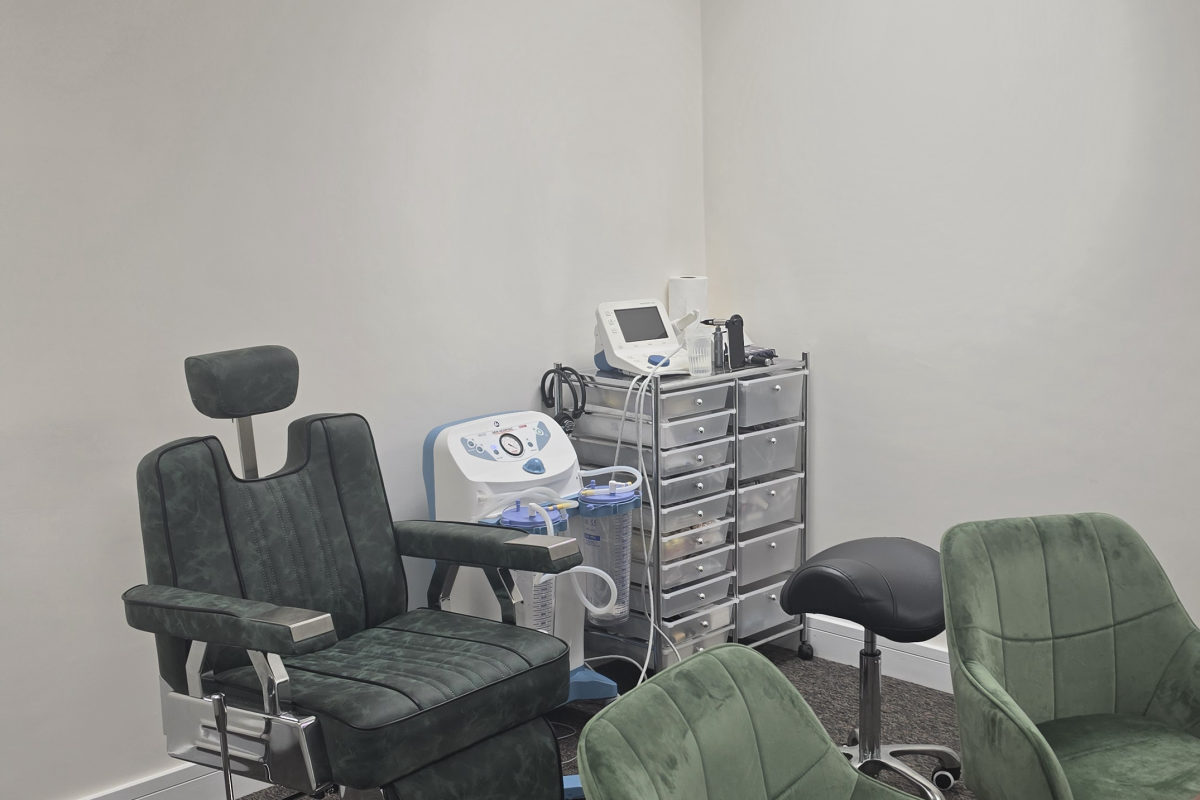
Microsuction uses a gentle medical suction device, a bit like a tiny vacuum, to lift wax out of the ear canal. We use a camera and a light so we can see the ear canal and eardrum clearly the whole time, and you can watch on the screen too. ENT UK describes microsuction as a safe and commonly used way to clear wax.
- No water is flushed into the ear, so there's a much lower risk of infection than with syringing.
- It's controlled and precise, so it's suitable even for people with a history of a perforated eardrum or ear surgery, where syringing would be unsafe.
- We can see the wax the entire time rather than working blind.
- It's usually done in a single appointment.
It can sound a little loud while it's happening, because the suction is close to your eardrum, but it isn't painful.
Ear candling — popular, but not recommended
Ear candling involves placing a hollow "candle" in the ear and lighting the far end, on the theory that it draws wax out. It's widely available and often marketed as natural. The problem is that the evidence doesn't support it.
A well-known study in The Laryngoscope tested ear candles and found they produce no suction and remove no wax — in fact candle wax was sometimes left behind in the ear. The researchers also gathered reports of injuries including burns and blocked ear canals. On top of that it carries a risk of hot wax dripping onto the eardrum.
Our honest advice: avoid it. It doesn't work, and it can hurt you.
Ear syringing (water irrigation) — largely being phased out
Syringing, or water irrigation, was the traditional method: flushing the ear with water to wash wax out. Many GP surgeries have now stopped offering it.
It can work for some people, but it carries a higher risk than microsuction. Because it's done without a clear view of the ear canal, and forces water in, it can lead to infection, and it isn't safe for anyone with a perforation, grommets, or a history of ear surgery. That's a large part of why the profession has moved towards microsuction. The NHS lists irrigation, microsuction and manual removal as the main clinical options.
At-home options — fine for prevention, not for a blockage
Olive oil drops are genuinely useful for softening wax and, for many people, keeping it from building up in the first place. We often recommend them before an appointment to make removal easier.
What we'd steer you away from is cotton buds and ear-cleaning "tools" pushed into the canal. They tend to push wax deeper and can scratch the canal or damage the eardrum — ENT UK advises against putting cotton buds in your ears, noting that ears are largely self-cleaning. As the old advice goes, put nothing smaller than your elbow in your ear.
So which should you choose?
For a genuine blockage, microsuction is the safest, most reliable option, and it's what we use for every wax removal at BFG. It's £60 at our Team Valley clinic in Gateshead, or £80 as a home visit across Newcastle and the North East, with both ears included either way.
If we look in your ear and find there's no wax to remove, we'll tell you honestly and we won't charge you for a procedure you didn't need.
Common questions
Does microsuction hurt?
Is ear candling safe?
Do I need to use olive oil before my appointment?
How long does wax removal take?
Sources
- Earwax build-up — NHS
- Ear microsuction and Self-help tips for earwax build-up — ENT UK
- Ear candles: efficacy and safety (Seely DR et al., The Laryngoscope, 1996) — PubMed
If you would rather have it done properly
Our microsuction earwax removalEarwax removal in GatesheadEarwax removal in NewcastleEar care products
Blocked or uncomfortable ears? We can help.
Gentle, water-free microsuction at our Team Valley clinic, or a home visit across the North East. Both ears included.