Hearing aid problems — and what to do about each one
From the simplest thing (which one goes in which ear) to the hardest (they’re in a drawer and you’ve stopped wearing them). Every answer says where it came from, so you can check it yourself.
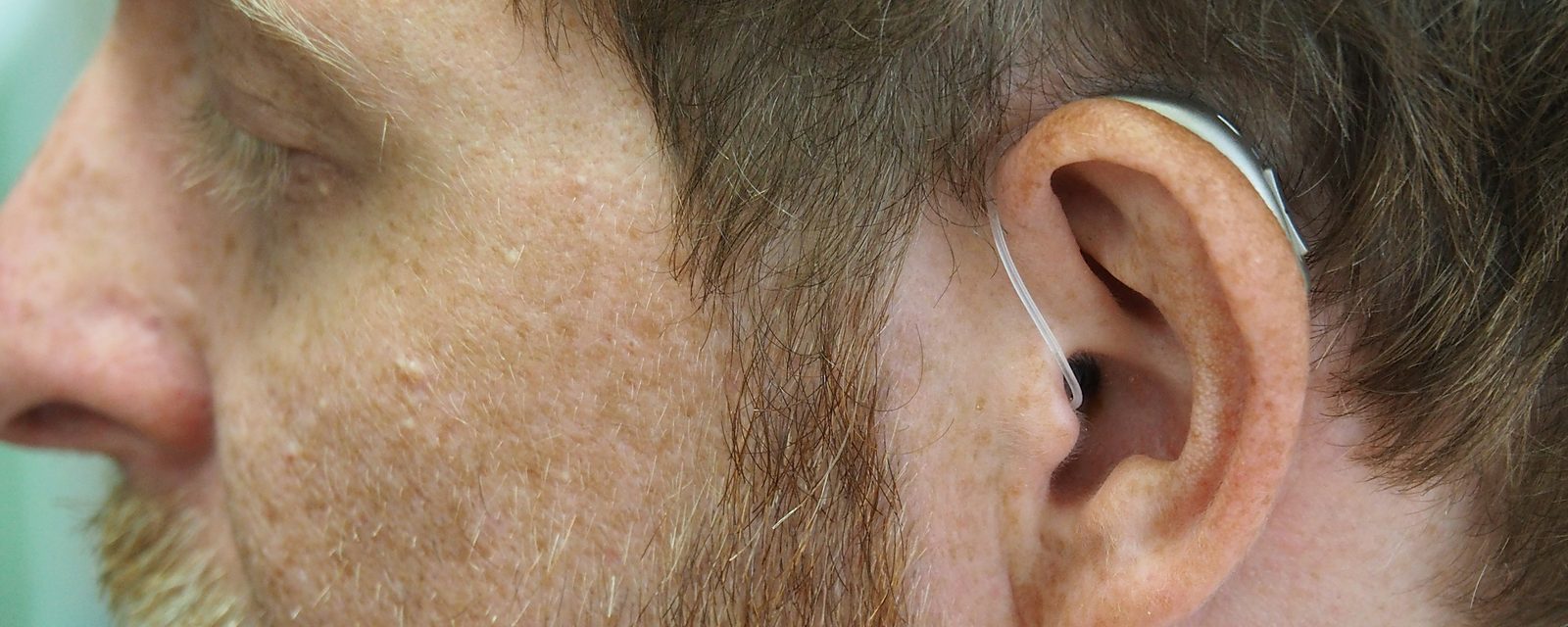
Photo: Mark Paton / Unsplash
By Paul Jepson, HCPC-registered Hearing Aid Audiologist · Reviewed August 2026
This page is general information, not medical advice, and it can’t replace having your own aids and ears looked at. If something hurts, or your hearing changes suddenly, please contact us or your GP.
How to use this page
- It’s ordered by how hard the problem is to fix, not by how common it is. Start at the top.
- Most people’s problem is in the first section and takes under a minute to sort out.
- Every answer names its source and links to it — NHS, NICE, RNID, Cochrane, and the manufacturers’ own support pages.
- Nothing here voids a warranty or needs a tool you weren’t given. If a fix needs the clinic, it says so.
Hearing aids are small, they live in a warm damp place, and they get handled by tired hands at the end of a long day. Things go wrong. Almost all of it is ordinary and fixable — but people don’t always know that, so the aids end up in a drawer instead of in their ears.
This is the list we work through with our own clients, written down. Jump to whichever section sounds like your problem:
Quick fixes you can try yourself
Most hearing aid problems are one of these, and most take under a minute to put right.
Telling left from right, and getting the dome or mould properly seated
Each aid is programmed for one ear, so swapping them or leaving a dome half-in gives the wrong amplification and a poor seal.
What to do
- Check the small colour marker — red is right, blue is left
- Feel for the tactile marker if colour is hard to see
- Ask us to walk through insertion again if it still doesn't feel natural after a few weeks
- Book a re-fit check if a dome or mould never feels fully seated
Where this comes from RNID's care guide states plainly: "Red = right ear, Blue = left ear." RNID — Looking after standard-fit hearing aids (2020)
What the makers say
- Oticon — Putting on and removing Blue = left, red = right (sometimes hidden inside the battery drawer). For RITE/BTE: wire over the ear, gently pull the ear outward, twist the earpiece into the canal.
- Phonak — How-to video library Model-specific videos for inserting and removing Virto custom aids (with or without removal line) and Audéo receiver-in-canal aids.
Whistling or squealing (feedback)
Sound leaking out past a loose dome or mould gets picked up by the microphone and re-amplified in a loop.
What to do
- Push the dome or mould in fully and check it's the right size
- Keep microphones uncovered by hats, scarves or headphones
- Have earwax checked — a blockage reflects sound back out
- Book an adjustment or a new mould if it keeps happening
Where this comes from RNID identifies the three leading causes of whistling as a loose fit, covered microphones, and an earwax blockage. RNID — Solving common hearing aid problems (2024)
What the makers say
- Starkey — Whistling Whistling in the charger usually means low battery or the aid isn't seated on the charging post; whistling in the ear usually means a poor dome or mould fit.
- Phonak — Why is it whistling? Two main causes: incorrect insertion and earwax in the canal. Check the fit, have the ear checked, contact us if it continues.
Batteries dying quickly, or a rechargeable aid not charging
Zinc-air batteries start draining the moment the tab is peeled; rechargeable contacts fail if dirty, damp or not seated in the charger.
What to do
- Change disposable batteries about once a week with all-day wear
- Wipe charging contacts dry each night and check the aid clicks fully into the charger
- Leave the battery door open overnight on disposable models
- Carry a spare pack or portable charger when travelling
Where this comes from RNID advises changing batteries about once a week if the aids are worn throughout the day. RNID — Cleaning and maintaining your hearing aids (2024)
What the makers say
- Starkey — Batteries FAQ Sizes 10, 312, 13 and 675 last roughly 3–22 days. Store at room temperature, open the battery door nightly, handle with clean hands, remove dead cells promptly.
- Phonak — Charging guide What solid vs blinking red / yellow / green LEDs mean, typical full-charge times, and what to do if the light stays blinking after 3+ hours.
- Oticon — What the beeps mean Three alternating tones every 30 min = about two hours of battery left; four descending = powering down; eight beeps ×4 = microphone needs a service check.
Moisture and sweat muffling the sound
Condensation from body heat, humid weather or sweat collects in the tubing and casing.
What to do
- Flick or shake the tubing to clear trapped moisture
- Use a drying box or desiccant capsules overnight
- Remove aids before showering, swimming or heavy exercise
- Bring the aid in for a professional dry-out if sound cuts in and out
Where this comes from RNID lists "moisture or condensation in the tubing" as a direct cause of no sound or reduced sound quality. RNID — Solving common hearing aid problems (2024)
What the makers say
- Starkey — Dryers and dehumidifiers Store overnight in a drying box, clean contacts first, leave the battery door open so moisture can escape. image
- Oticon — Drying wet hearing aids IP68 handles rain and sweat, not immersion. Remove batteries or power off, air-dry somewhere warm and ventilated, never microwave or oven, keep rechargeables under 40°C.
Earwax blocking the receiver or wax guard
Wax naturally migrates onto the tiny mesh guard over the receiver and muffles or cuts off sound.
What to do
- Replace the wax guard as shown at fitting — keep spares at home
- Use the tool provided, never anything sharp or improvised
- If the blockage is in the ear itself, book a wax removal
- Bring the aid in if sound stays muffled after a new guard
Where this comes from RNID names earwax blockage as a leading cause of "no sound or reduced sound quality". RNID — Solving common hearing aid problems (2024)
What the makers say
- Starkey — Hear Clear wax guard Replace the Hear Clear guard with the supplied tool whenever sound goes muffled — it's routine receiver maintenance, not a repair.
- Oticon — ProWax filter Empty pin pulls the old filter out, loaded pin pushes the new one in — always the same filter type the aid came with.
- Phonak — CeruShield Disk Remove the dome, rotate out the used disk with the approved tool, click in a fresh one, reattach — never improvise the tool. image video
Dome or mould discomfort, itching or soreness
An ill-fitting dome or mould presses on sensitive canal skin, especially in the first days.
What to do
- Ask about a different dome size or style, or a custom mould
- Insert with clean dry hands and check it's fully seated
- Take short breaks in week one rather than stopping altogether
- Report persistent soreness — it's usually a quick fix
Where this comes from RNID's guide: for discomfort or soreness "the audiologist can adjust or provide new earmould." RNID — Solving common hearing aid problems (2024)
Living with them day to day
Cleaning, phones, television, and keeping track of them.
Losing a hearing aid
Small devices fall out unnoticed when removing glasses, masks, jumpers or during activity.
What to do
- Use a retention clip or leash if you're active
- Store both aids in their case in the same place every night
- Use the app's 'find my hearing aid' locator
- Ask us about loss cover before assuming a full replacement cost
Where this comes from One NHS trust charges £65 for one lost aid and £130 for two unless exempt — private replacement costs are higher. NHS (Bedfordshire Hospitals) — Lost / Damaged Hearing Aid Policy (2023)
What the makers say
- Starkey — Warranty & Worry-Free cover Standard warranty covers internal faults and refitting within 90 days; Worry-Free plans extend loss and damage cover up to 5 years.
- Phonak — Warranty terms One year on manufacturing defects (excluding batteries, tubing, moulds, receivers); excludes water immersion, chemicals and unauthorised repair.
Keeping up a cleaning routine
Skin oils, wax and dust build up on domes, tubing and microphones.
What to do
- Wipe with a soft dry cloth every day
- Wash earmoulds weekly in warm soapy water (moulds only, never the aid)
- Replace tubing every 4–6 months
- Use the brushes and picks provided
Where this comes from RNID recommends replacing tubing every 4 to 6 months and washing earmoulds weekly. RNID — Cleaning and maintaining your hearing aids (2024)
What the makers say
- Starkey — Use & care guide Wipe daily with a dry soft cloth, keep away from water and sprays, store cool and dry, insert and remove while seated so a drop doesn't break them.
- Oticon — Cleaning Daily soft dry cloth over a soft surface, brush the microphone openings, never immerse, replace wax filters and domes at least monthly.
Bluetooth or app pairing problems
A phone update, another nearby Bluetooth device, or a skipped step breaks the connection.
What to do
- Pairing mode → phone Settings → Accessibility → Hearing Devices → then the app
- Toggle Bluetooth off and on, or re-pair, after any phone update
- Keep only one phone paired at a time
- Bring your phone to the clinic for a hands-on session
Where this comes from RNID: "all major hearing aid brands offer a free app" — but phone updates can disrupt the link until re-paired. RNID — Connecting your hearing aids to your smartphone (2024)
What the makers say
- Starkey — My Starkey app setup Download the app, enable Bluetooth (Android) or add via Settings → Accessibility → Hearing Devices (iPhone), then switch the aids off and on to enter pairing mode.
- Oticon — Pairing guide iPhone pairs via Bluetooth / Accessibility settings, Android via the Companion app (Fast Pair); separate steps for TV adapters and ConnectClip.
- Oticon — Connection problems Toggle Bluetooth, restart the aids, force-close and reopen the app, fully unpair and re-pair, clear the phone's Bluetooth cache, keep one device paired.
- Phonak — myPhonak won't connect Internet needed for first setup, Bluetooth on, aids charged, switch aids off/on for pairing mode, check flight mode, enable location on Android.
Phone calls sounding muffled or whistling
Holding a handset over the aid's microphone is the worst way to use it.
What to do
- Stream calls straight to both aids over Bluetooth
- Use the phone's 'hearing device' audio setting
- Ask about telecoil or a neckloop for older phones
- Let us confirm the call program is active
Where this comes from RNID: modern aids "wirelessly link to smartphones, enabling direct audio streaming of calls, music and podcasts." RNID — Connecting your hearing aids to your smartphone (2024)
What the makers say
- Phonak — Bluetooth calls & streaming App control needs iOS 15+ / Android 8+ with Bluetooth 4.2; plain call and audio streaming works with any phone supporting Bluetooth 2.1+ (HFP/A2DP).
TV too loud for the room but too quiet for you
Distance and room noise mean you need more volume than everyone else finds comfortable.
What to do
- Use a TV streamer that sends sound privately to your aids
- Sit closer or add a soundbar instead of turning the set up
- Turn on subtitles alongside the audio
- Ask us which streamer matches your aids
Where this comes from NHS guidance recommends assistive listening devices including TV amplifiers so the wearer can manage volume without affecting the room. NHS — Hearing aids and implants (2023)
What the makers say
- Oticon — TV Adapter pairing Restart the aids, hold them near the adapter until the blue lights go steady (up to 60 s), then pick the TV program.
- Phonak — TV Connector setup Plug in power, connect USB or optical to the TV, and it auto-pairs with aids within about a metre on first power-up. video
Getting used to them
The first weeks and months — where most people quietly give up, and what actually helps.
Your own voice sounds boomy or 'in a barrel' (occlusion)
Plugging the canal traps the sound of your voice travelling up through the jawbone — only you hear it that way.
What to do
- Ask about a vented dome or more open fit
- Give it 2–4 weeks of consistent wear
- We can lower low-frequency gain if it doesn't settle
- Practise reading aloud at home
Where this comes from RNID: "your brain hasn't heard these sounds at their correct levels for a long time, and it will take a little time to learn that this level is normal." RNID — Adjusting to your hearing aids (2020)
What the makers say
- Starkey — Getting used to hearing aids Adjustment takes 6 weeks to 6 months: start part-time, build up, rest when fatigued, keep expectations realistic.
Everything sounds too loud, sharp or tinny at first
The brain hasn't processed full volume for years, so cutlery, footsteps and paper feel jarring when they return all at once.
What to do
- Start with short sessions in quiet, then build up
- Note the specific sounds that feel wrong for your follow-up
- Give the settings about a month before judging them
- Don't just turn it down — tell us so the right frequencies are adjusted
Where this comes from RNID: adaptation "takes approximately one month on average" with regular use. RNID — Adjusting to your hearing aids (2020)
What the makers say
- Starkey — Getting used to hearing aids Adjustment takes 6 weeks to 6 months: start part-time, build up, rest when fatigued, keep expectations realistic.
Following conversation in restaurants and noisy rooms
Separating one voice from clatter is a brain task hearing loss makes harder — volume alone doesn't fix it.
What to do
- Ask for a directional 'restaurant' program
- Try a clip-on remote microphone for your companion
- Sit with your back to a wall, away from kitchens and speakers
- Use sightlines and lip-reading alongside the aids
Where this comes from Cochrane: hearing aids give "a large beneficial effect on listening ability" — noisy group settings remain the hardest situation even for well-fitted users. Cochrane — Hearing aids for mild to moderate hearing loss in adults (2017)
What the makers say
- Starkey — Edge Mode+ (Genesis AI) A tap in the app runs on-demand AI processing to sharpen speech or improve comfort in a hard listening moment.
- Oticon — Intent — 4D sensors Reads head and body movement, conversation activity and the sound scene, then uses a deep neural network to support what you're actually engaging with.
- Phonak — AutoSense OS Scans the environment continuously (up to 700 times a second on Lumity) and blends directional mics and noise cancelling automatically; AutoSense 7.0 on Infinio is trained on far more environments.
Listening fatigue — drained by the end of the day
An unaided or poorly fitted brain works far harder to fill gaps in speech; that effort is tiring.
What to do
- Wear the aids through all waking hours, not just for 'hard' situations
- Build in quiet recovery breaks on demanding days
- Get the fitting verified rather than tolerating an approximate setting
- Mention fatigue at review so noise settings can be reassessed
Where this comes from Hornsby (2013, Ear and Hearing): "properly fitted hearing aids can reduce listening effort and susceptibility to mental fatigue." American Academy of Audiology — Listening Fatigue (2013)
How long it really takes to get used to them
The auditory brain needs sustained, repeated exposure to relearn what 'normal' sounds like.
What to do
- Build up wearing time gradually — hours, then situations
- Keep a simple diary of what still feels wrong for the 6–12 week review
- Expect most early difficulty to resolve over roughly a month
- Come back sooner if something feels clearly wrong
Where this comes from RNID: about one month on average, "though it can take longer — everyone's different." Starkey frames it as 6 weeks to 6 months. RNID — Adjusting to your hearing aids (2020)
What the makers say
- Starkey — Getting used to hearing aids Adjustment takes 6 weeks to 6 months: start part-time, build up, rest when fatigued, keep expectations realistic.
Wearing hours — what the aids record, and why we ask
Aids log daily wear time. Low hours are the earliest reliable sign that a fitting isn't working for someone.
What to do
- Ask to see your own wear-time log at review
- Aim for all waking hours — intermittent use slows adaptation
- Be honest if you're not wearing them much; it changes what we do
- Treat low hours as a prompt to troubleshoot, not to give up
Where this comes from NICE tracks "the proportion of adults continuing to wear new hearing aids after first follow-up, and at 12 and 24 months" as a quality outcome. NICE — NICE QS185 — Quality statement 6 (2019)
What the makers say
- Starkey — Self Check in the app Run the monthly Self Check (green / yellow / red per component) and try TeleHear AI's instant sound adjustment before booking.
Giving up — aids left 'in the drawer'
Unresolved comfort, sound or handling problems build up until stopping feels easier than persevering.
What to do
- Contact us as soon as a problem appears — don't wait for the review
- Use the 6–12 week follow-up to raise every niggle
- Ask about reprogramming before deciding they're 'wrong for me'
- Consider a different style if real problems remain after adjustment
Where this comes from EuroTrak UK 2022: 8% of UK hearing aid owners don't use them at all, and a further 18% use them under one hour a day. EHIMA (manufacturers' association survey) — EuroTrak UK 2022 (2022)
What the makers say
- Starkey — TeleHear remote adjustments A video call in the My Starkey app lets us adjust and sync your settings without a clinic visit, using a one-time code.
- Oticon — RemoteCare Join the video waiting room in the Companion app with aids paired and charged; we connect and push new settings live.
- Phonak — Remote Support Live adjustment over video in the myPhonak app using a code saved at your in-clinic fitting. Feedback tests and firmware updates still need a visit.
The 6–12 week follow-up
Real-world listening reveals problems a fitting room can't; early support changes whether people keep using their aids.
What to do
- Attend even if things feel broadly fine
- Review comfort, sound, programs, battery and phone together
- Bring a written list of situations that still feel difficult
- Ask for face-to-face if hands-on adjustment is needed
Where this comes from NICE NG98 recommends follow-up "6 to 12 weeks after the hearing aids are fitted" — without it "people may stop using their hearing aids." NICE — NICE NG98 — Hearing loss in adults (2018)
Annual review, even when things feel settled
Hearing keeps changing; settings, domes and wax levels that were right a year ago may not be now.
What to do
- Book a routine annual check without waiting for a problem
- Re-test and re-verify programming against current results
- Replace worn domes and tubing; check charger health
- Review your wear log and the goals set at fitting
Where this comes from NICE: services should have "a system in place for recalling people with hearing devices for regular reassessment." NICE — NICE QS185 — Quality statement 6 (2019)
Tinnitus alongside hearing loss
Amplifying the sound around you reduces the contrast that makes the internal noise stand out.
What to do
- Ask about aids with built-in tinnitus sound support
- Consistent daytime wear itself reduces prominence
- Structured sound therapy alongside the aids
- Ask for counselling or CBT referral if it affects mood or sleep
Where this comes from RNID: around 1 in 7 UK adults have tinnitus; "hearing the sounds around you better can make your tinnitus less noticeable." RNID — Managing tinnitus (2024)
What the makers say
- Starkey — Multiflex Tinnitus Technology A customisable sound stimulus set by the audiologist, plus the Relax app with 12 relief sounds.
- Oticon — Tinnitus SoundSupport Once enabled at fitting, choose a relief sound in the Companion app and adjust relief and background volume per ear.
The bigger picture
Why wearing them matters beyond your ears, said honestly.
Does treating hearing loss protect thinking and memory?
Untreated loss diverts brain resources to decoding speech and reduces the social stimulation linked to brain health.
What to do
- Treat earlier rather than waiting — clearest benefit is in people already at higher risk
- Wear consistently; occasional use showed no measurable benefit
- Raise memory concerns with your GP rather than self-diagnosing
- See aids as one part of brain-health prevention, not a guaranteed fix
Where this comes from ACHIEVE trial: hearing intervention cut cognitive decline by 48% over 3 years in the higher-risk group — but no significant benefit across the whole trial population. Both facts belong together. Johns Hopkins (ACHIEVE) — ACHIEVE Study — Key Findings (2023)
Hearing loss as a recognised dementia risk factor
Large population studies place hearing loss among the biggest modifiable factors linked to later dementia risk.
What to do
- Get hearing checked in midlife, not when it feels disabling
- Treat it alongside blood pressure, exercise and staying social
- Ask for a baseline test even before symptoms feel significant
- Talk openly about family history or worries
Where this comes from The 2024 Lancet Commission update says the evidence that treating hearing loss decreases dementia risk "is now stronger" than in its previous report. Population-level evidence, not proof for any individual. The Lancet Commission — 2024 Lancet Commission update (summary via CIICA; DOI 10.1016/S0140-6736(24)01296-0) (2024)
Withdrawing from social situations
Following group conversation is exhausting and embarrassing, so people start avoiding it — which compounds isolation.
What to do
- Involve family and friends; it affects relationships, not just you
- Wear the aids in the situations you've been avoiding, not just at home
- Tell people what helps: face you, one at a time, less background noise
- Come back if you notice yourself withdrawing
Where this comes from Research cited by RNID found hearing loss raised loneliness risk specifically for those who did not wear hearing aids (Pronk et al, 2011); people typically wait around 10 years before seeking help. RNID — Hearing Matters report (2015)
Stigma and embarrassment about wearing them
Hearing aids are still read as an ageing signal in a way glasses are not.
What to do
- Talk openly — most people respond supportively once they understand
- Choose a smaller, discreet or colour-matched style if visibility is the worry
- Weigh the stigma against the benefit most owners report
- Ask about styles suited to sport or professional settings
Where this comes from RNID survey of 2,768 people: 34% would try to hide hearing aids if they needed them; 47% feel aids lack the acceptance glasses have. RNID — 1 in 3 would try and hide hearing aids (2024)
Cost worries and what hearing aids can't do
People expect aids to restore hearing like glasses restore sight; disappointment follows when they don't.
What to do
- Know the NHS route exists and what it does and doesn't offer
- Discuss what a specific aid realistically can and can't do before buying
- Expect a large lift in listening ability and a smaller lift in overall quality of life
- Don't judge results before the 6–12 week follow-up
Where this comes from Cochrane: hearing aids produce "a large beneficial effect on listening ability" but only "a small improvement in health-related quality of life." Cochrane — Hearing aids for mild to moderate hearing loss in adults (2017)
What the makers say
- Starkey — Warranty & Worry-Free cover Standard warranty covers internal faults and refitting within 90 days; Worry-Free plans extend loss and damage cover up to 5 years.
- Phonak — Warranty terms One year on manufacturing defects (excluding batteries, tubing, moulds, receivers); excludes water immersion, chemicals and unauthorised repair.
How to read the evidence on this page
We’d rather show our working than ask you to take our word for it. A few things worth knowing about the sources:
- NHS, NICE, RNID and Cochrane are independent. They have nothing to sell you, and where they disagree with a manufacturer we’ve gone with them.
- EuroTrak is run by the hearing aid manufacturers’ trade association. Its survey figures are useful and we’ve used them, but they aren’t independent and we’re not going to pretend otherwise.
- The dementia research is genuinely encouraging but often overstated. The widely quoted “48% less cognitive decline” figure from the ACHIEVE trial applies to the higher-risk group in that study — across everyone in the trial there was no significant difference. Both halves of that belong together, and any clinic quoting only the first half is selling to you.
- Manufacturer pages are their own instructions, linked rather than copied, because your aids are the authority on your aids.
If something here doesn’t match what you were told at your fitting, go with what your own audiologist told you — they have your hearing test and we don’t.
Still stuck?
None of this replaces someone looking at your actual aids. If you’ve worked through the relevant section and it’s still not right, that’s exactly what we’re here for — and you don’t have to have bought your aids from us.
If your aids came from us, this all lives inside your member area too, alongside your own fitting notes and day-by-day journey.
Quick answers
Whistling or squealing (feedback)
Earwax blocking the receiver or wax guard
Moisture and sweat muffling the sound
Your own voice sounds boomy or 'in a barrel' (occlusion)
Everything sounds too loud, sharp or tinny at first
Following conversation in restaurants and noisy rooms
How long it really takes to get used to them
Batteries dying quickly, or a rechargeable aid not charging
Don't put it off — get your hearing checked
An unhurried assessment at our Team Valley clinic, or a home visit across the North East. Honest advice, no pressure, no jargon.