How to tell if you, or someone you love, might need a hearing test
Hearing usually fades so slowly that the person themselves is the last to notice. Here are the everyday signs worth paying attention to.
By Paul Jepson, HCPC-registered Hearing Aid Audiologist · Reviewed July 2026
This article is general information, not a diagnosis or a substitute for a hearing assessment. If you're worried about your hearing, or you notice a sudden change, speak to your GP or call us on 0191 5111 878.
Key points
- Hearing loss is gradual, so family often notice it before you do.
- The most common signs are turning the TV up, asking people to repeat themselves, and struggling in noisy places.
- A test is quick and painless, and sometimes the problem is simply earwax.
- Sudden hearing loss is a medical emergency — see a GP the same day.
Hearing tends to fade so slowly that most people don't notice it happening. It's often a partner, a son or a daughter who spots it first, and the NHS makes the same point, noting that someone else may notice problems with your hearing before you do. If you've started wondering about your own hearing, or you've begun to worry about a parent, this is a straightforward guide to the signs that mean it's worth getting checked.
None of these on their own prove you have hearing loss, and everyone mishears now and then. But if a few of them sound familiar, or they've been creeping up over months rather than days, it's worth doing something about it. A test is quick, painless, and tells you exactly where you stand, so you're not left guessing.
The everyday signs
These are the ones we hear about most often. The charity RNID lists very similar signs.
The TV creeps louder
This is one of the most common early signs. If people around you keep asking you to turn it down, or you find yourself relying on subtitles more than you used to, your ears may be working harder than they should to make sense of the sound.
"Sorry, say that again?"
Struggling to follow a conversation in a busy café, restaurant or family gathering is often the very first thing people notice. Quiet one-to-one chats can still feel perfectly fine, while group settings and background noise become tiring and hard to keep up with.
Phone calls got harder
Without lip-reading and facial expressions to fill in the gaps, the phone is often where hearing loss shows up first. Voices sound less clear, you turn the volume right up, and you find yourself asking people to repeat themselves more than you used to.
Worn out after socialising
When your brain is straining to piece together half-heard words all evening, it is genuinely exhausting. A lot of people put this tiredness down to age or a busy day, when hearing is quietly the real cause.
Everyone seems to mumble
If it feels like everyone around you has started mumbling, it usually is not them. High-pitched consonants like "s", "f" and "th" are often the first sounds to fade, which makes speech sound unclear and muddy rather than simply too quiet.
If you're worried about a parent
It can be hard to raise. Many people are sensitive about their hearing and will brush it off. A gentle way in is to frame it as routine, the same as an eye test or a blood pressure check, rather than as a problem.
You might notice they've withdrawn a little at family meals, or answer slightly off because they've misheard. It's worth addressing kindly rather than leaving it: the 2024 Lancet Commission on dementia identifies hearing loss as the single largest modifiable risk factor for dementia in mid-life, and untreated hearing loss is also linked to social isolation and low mood. Acting on it is one of the genuinely useful things you can do.
For anyone who finds getting out difficult, we offer home visits across Newcastle and the North East, so the test can happen in their own front room with no travel involved.
What a hearing test with us actually involves
There's nothing to be nervous about. A full assessment takes around an hour and is completely unhurried:
- We talk through your history and what you've noticed.
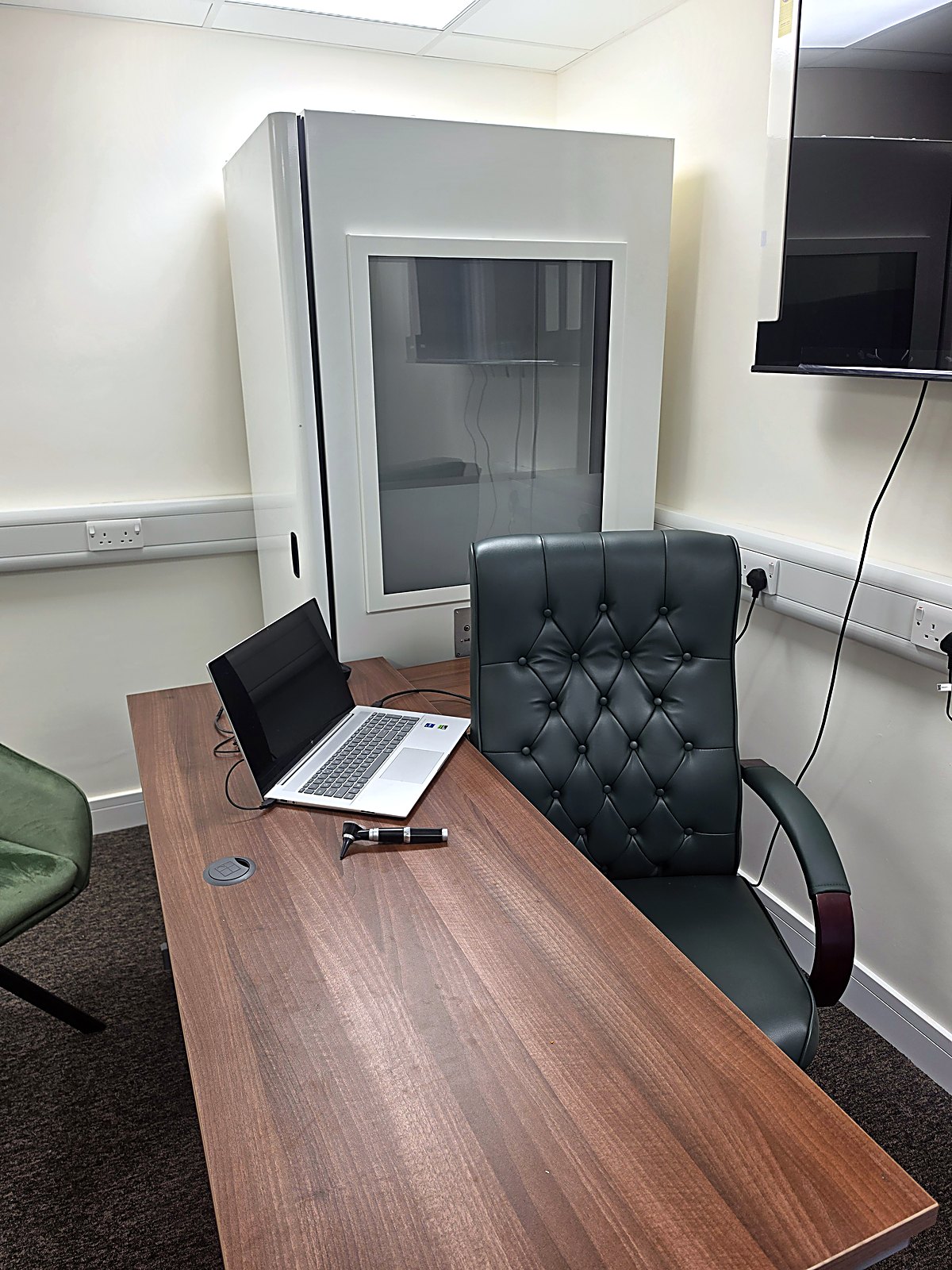
- We look inside your ears with a camera, and you can watch on the screen. Sometimes the "hearing loss" turns out to be nothing more than wax, which we can remove there and then.
- We carry out the hearing test itself in a quiet setting, playing tones and words at different pitches and volumes.
- We explain your results in plain English, and talk through the options if you do have some hearing loss. If you don't need anything doing, we'll tell you that too. No pressure, and no sales pitch.
If you'd like to get a rough sense of things before booking a full appointment, there's also a free online hearing check on our website that takes a couple of minutes. It won't replace a proper assessment, but it's a gentle, no-obligation first step, and it's a good way to nudge a reluctant relative into taking the next step.
Common questions
Is a hearing test painful?
How much does a hearing test cost?
Can you test my hearing at home?
At what age should I get my hearing checked?
Sources
Unsure about your hearing? Find out in 4 minutes.
Try our free online hearing check from home, or call us to book a full assessment at our Team Valley clinic.